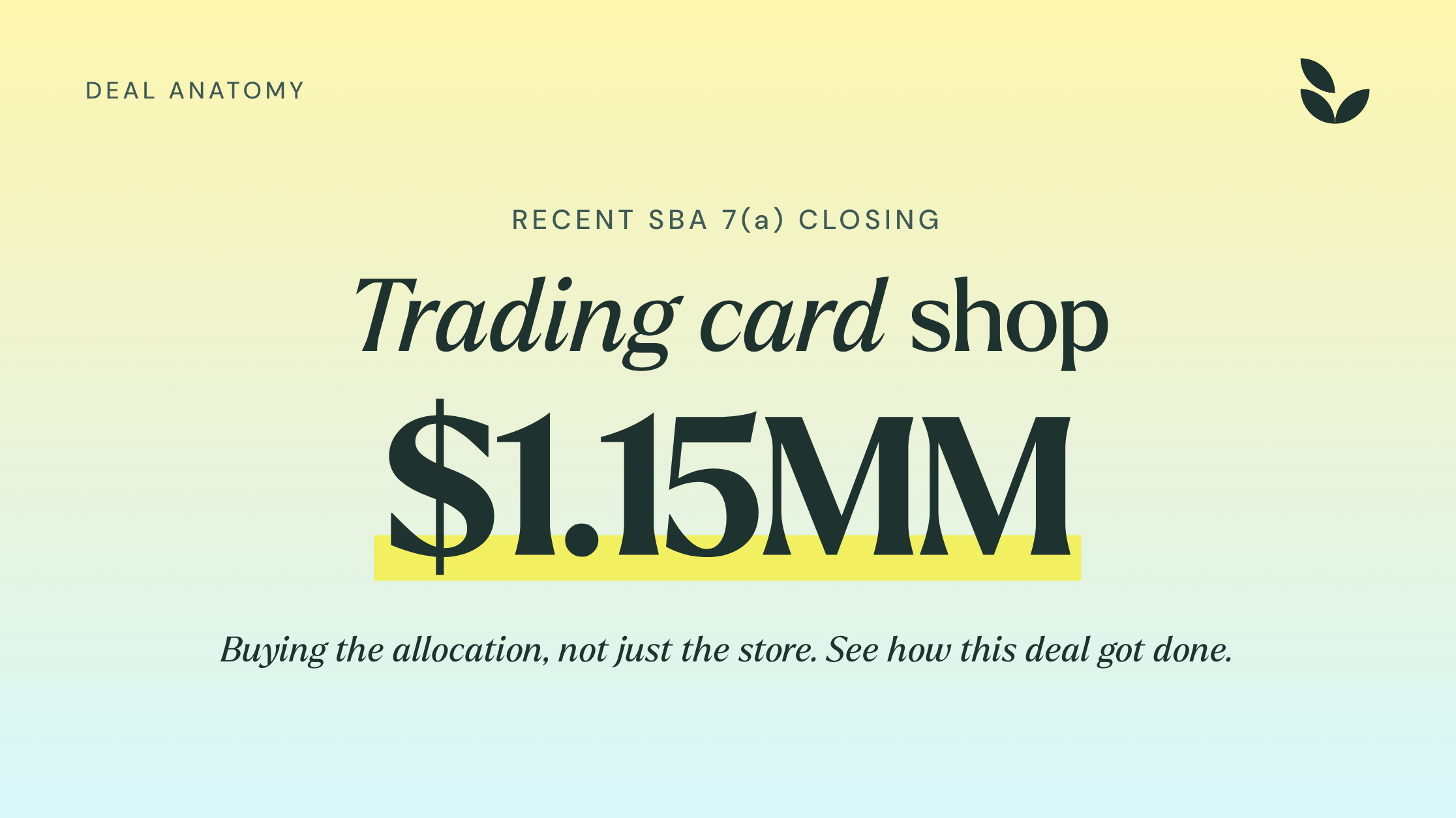
In the trading card business, the most valuable thing a shop owns isn’t on the shelf. It’s the allocation: how much product the major manufacturers will sell that shop on each new release.
This is the story of a first-year shop owner who bought a competitor to get it.
The buyer
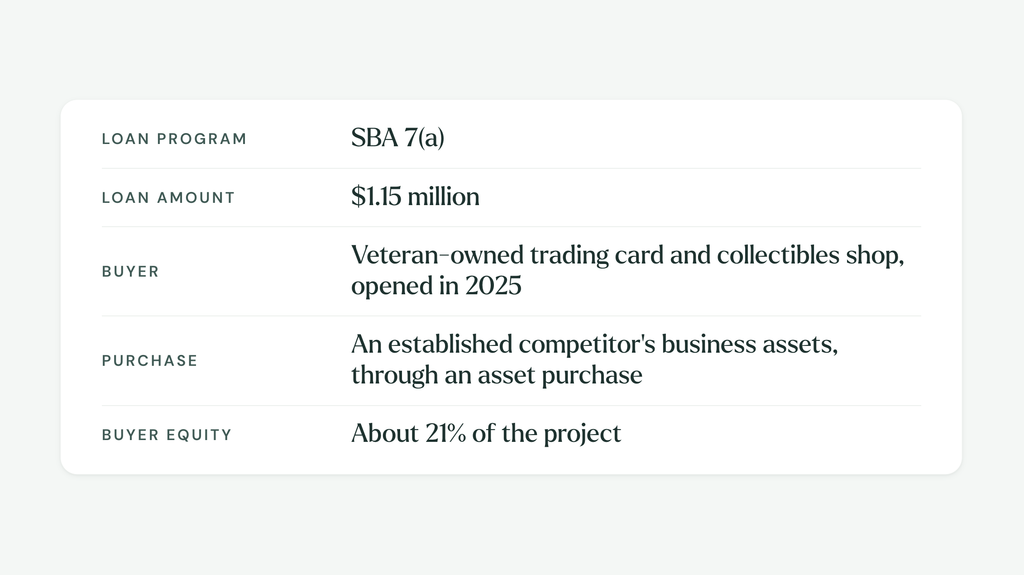
The buyer is a U.S. Army veteran who served as an officer before leaving the military. He opened his first trading card shop in late 2025, selling sports cards, trading card games, graded cards, and sealed product.
The shop grew quickly. Within its first year, it was profitable, and he had bought out his two minority partners to own the business outright. He also brought years of retail, inventory, and multi-unit management experience from earlier in his career.
The target
The target is an established card shop across town, open since 2020. It sells in the store, online, through live-streamed card breaks, and at events.
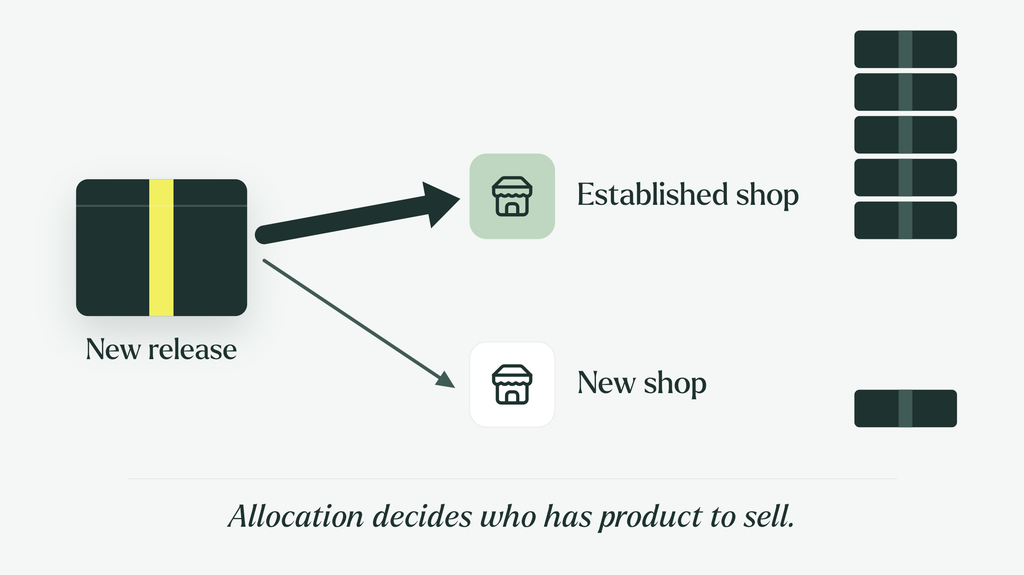
Its real advantage is allocation. The shop holds some of the largest manufacturer allocations in its state. On a big release, allocation decides who has product to sell and who doesn’t. New shops can’t get it, which made the allocation the core value of the acquisition.
The shop also ran on limited hours, closed Sundays, with a lean staff. One of the two owners wanted out, and the sellers decided to sell.
Why the deal made sense
- Allocation a new shop can’t buy any other way. More product on every release, at better pricing, across both locations.
- Room to grow the hours. Opening Sundays and extending weekday and Saturday hours adds roughly 100 operating days a year.
- Online channels the target never built. The target had no website or online marketplace presence. The buyer already sells online and at national card shows.
- Keep the margin in-house. Excess inventory that used to be wholesaled can be sold at retail across two stores.
The hard part: a buyer with less than a year in business
Most acquisition financing looks for a buyer with a long track record. This buyer had owned his shop for less than a year.
That had two effects. First, the deal couldn’t be treated as an expansion of an existing business, so the buyer had to bring real equity to the table. Second, the target’s own history was uneven. Its cash flow in 2023 and 2024 was thin before it strengthened in 2025.
As with most retail acquisitions, the hard assets also didn’t cover the loan after liquidation discounts. Most of the value was in the allocation, the inventory, and the customer base.
How it came together
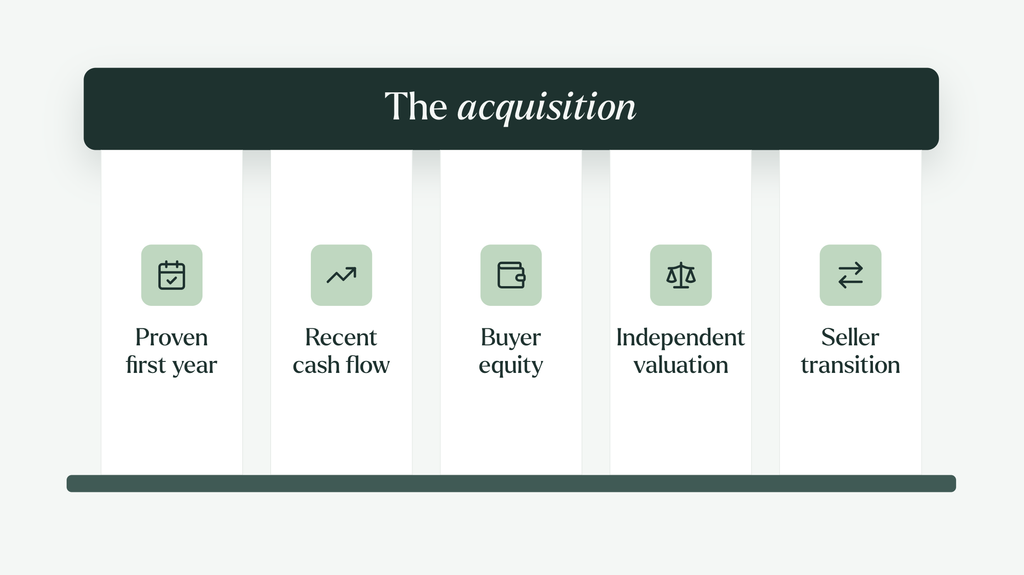
- The buyer’s first year spoke for itself. In under a year, his existing shop had built more than $1 million in revenue and strong cash flow. That gave the deal a second source of repayment and showed he could run this exact business.
- The target’s recent numbers held up. The shop’s 2025 and year-to-date 2026 cash flow covered the new debt. Combined with the buyer’s existing shop, coverage was strong.
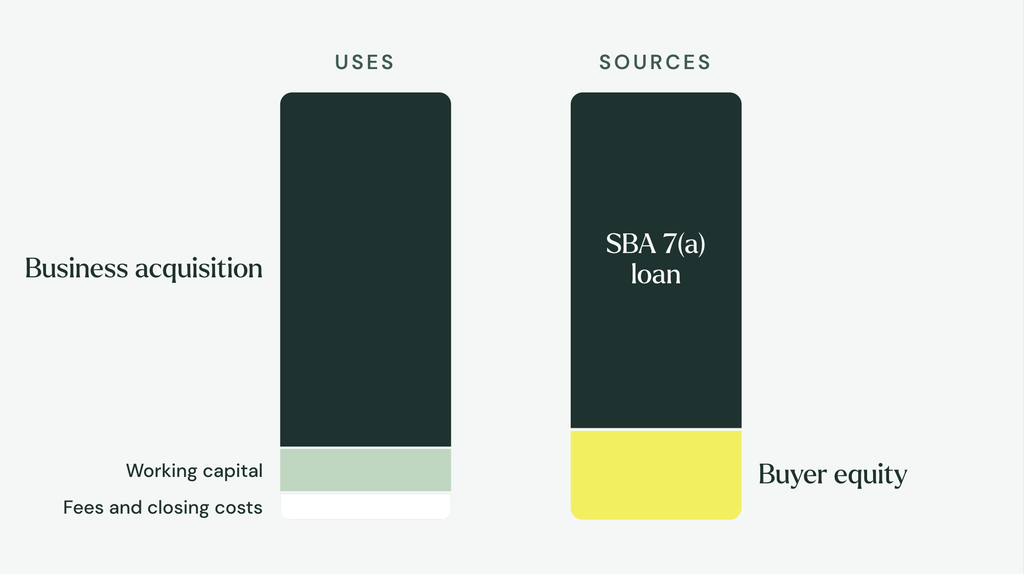
- The buyer put real money in. About 21% of the project came from the buyer’s own cash and his existing business, well above the SBA minimum for a business acquisition.
- An independent valuation backed the price. A third-party business valuation came in slightly above the purchase price.
- A clean handoff. The sellers agreed to a 60-day transition, a five-year non-compete, and the target’s longtime store manager is staying on.
The structure
One SBA 7(a) loan for $1.15 million covered about 79% of the $1.45 million project. The buyer covered the rest.
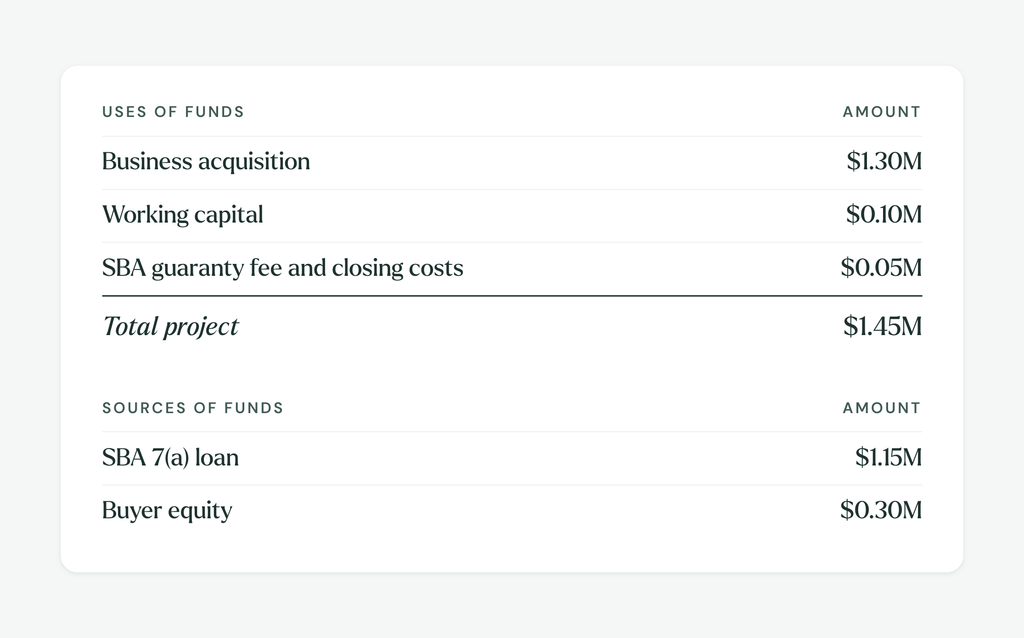
The working capital covers inventory already on pre-order for upcoming releases, day-to-day operating cash, and the costs of moving the shop into a larger space a few doors down. The loan has a 10-year term and is secured by all business assets. Our bank partner made the credit decision and funded the loan.
Lendesca handled everything in between. We built the file, structured the request, and managed it from the first conversation through closing, with one team on the deal the whole way.
What to watch for in your own clients
Deals like this one show up in CPA practices, M&A advisory firms, and bank pipelines more often than people expect. These are the signals worth paying attention to:
- A client wants to buy a competitor, even if their own business is young
- The target holds something hard to get any other way: an allocation, a license, a contract, a location
- A seller wants out and the business has a manager who can stay
- The buyer has strong recent results in the same industry
- The buyer has cash from an existing business to put toward equity
- The target’s best years are its most recent ones
If two or more of these sound familiar, it’s worth a conversation.
Two ways to get started
For referral partners
Have a client looking to buy a business in their own industry? Send them our way. We’ll handle it from the first conversation to closing and keep you updated on deal status the whole way.
Become a Lendesca Referral Partner
For business owners
Thinking about buying a competitor or adding a second location? Tell us what you have in mind. One team works with you from application to funding.
This case study describes a single transaction for illustrative purposes. Some details have been generalized to protect the borrower’s privacy. Lendesca is not a lender. Credit decisions are made by, and loans are funded by, our bank partner. SBA loans are subject to SBA eligibility requirements and bank credit review. Equity requirements and terms depend on each transaction and on current SBA rules.