Some of the strongest businesses we work with don’t have much in the way of hard assets.
This one is a national consumer health brand. Sales were strong. A new product launch was on deck. The balance sheet hadn’t kept up with the growth. Here’s how one SBA 7(a) loan brought it all together.
The business
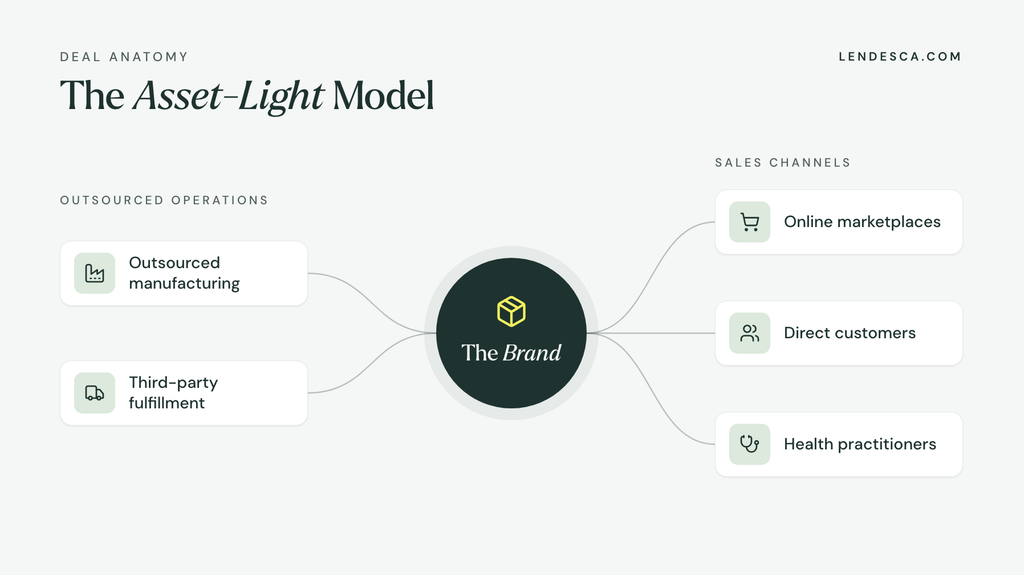
The company sells health monitoring products to consumers and to health practitioners. It sells direct through its own website and through online marketplaces. Customers buy a device once, then keep coming back for supplies. That recurring revenue is the engine of the business.
The company runs lean. A small team works out of a modest office. Manufacturing is handled by partners overseas. Warehousing and fulfillment run through third-party logistics providers.
That model is efficient, and it scales well. It also means most of the company’s value sits in places a balance sheet doesn’t capture well: the brand, the inventory, and the customer base.
The need
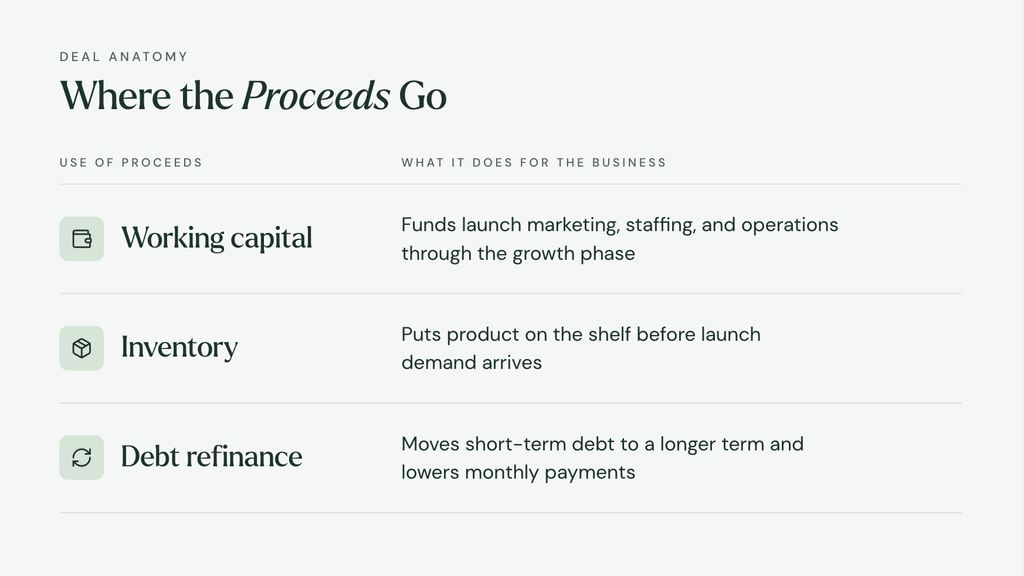
The company needed capital for three things at once.
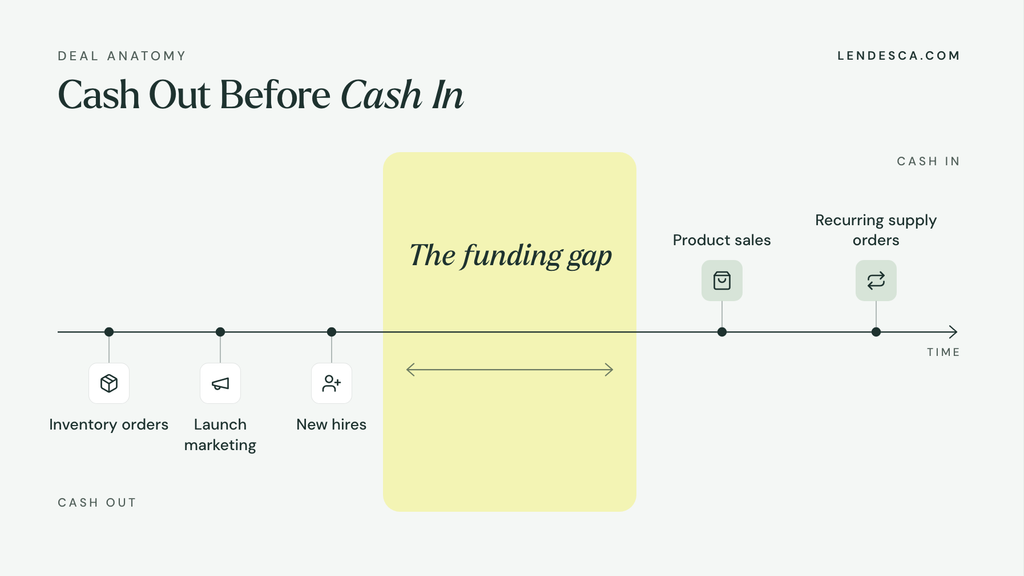
- Inventory ahead of a launch. A new generation of products was coming. Inventory had to be ordered and paid for months before the first sale.
- Working capital for growth. Marketing, staffing, and day-to-day operations all expand during a launch, well before the new revenue shows up.
- A longer runway on existing debt. The company carried short-term bank debt. Moving it to longer terms would lower monthly payments and free up cash flow for the launch.
All three come back to the same problem: cash going out before cash comes in.
The collateral gap
Conventional business financing usually starts with one question: what secures the loan?
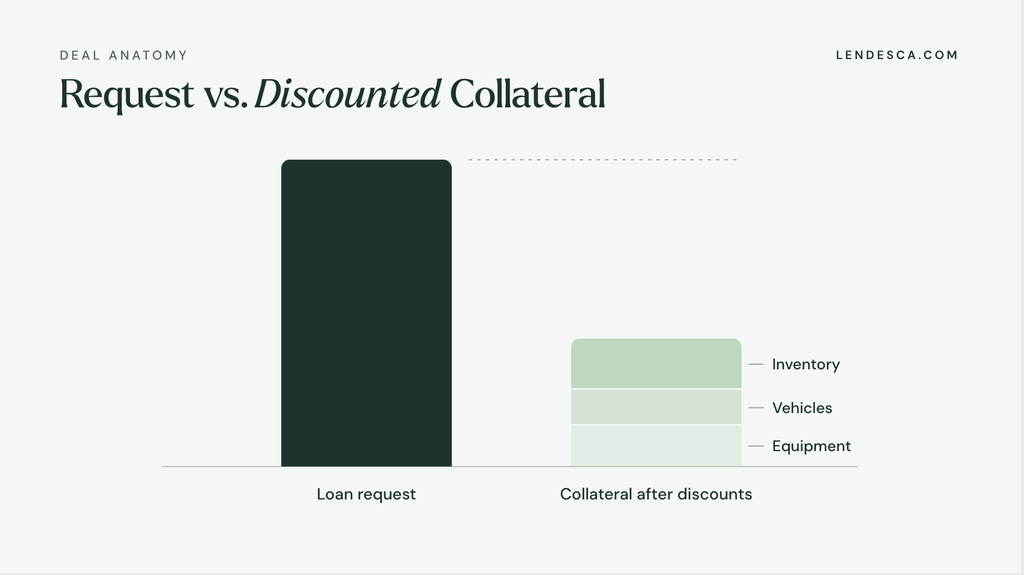
Banks discount business assets heavily when they size a loan. Inventory, vehicles, computers, and furniture are valued at what they would bring in a forced sale, often a fraction of their book value. For a company that owns no real estate and outsources its manufacturing, those discounted values add up to far less than the request.
Term length was the second problem. Conventional working capital lines are typically short and renew every year. A company in the middle of a product launch needs a longer horizon than that.
The business was sound. It simply didn’t fit a conventional collateral model.
Why SBA 7(a) fit
The SBA 7(a) program exists for businesses with strong fundamentals that conventional financing can’t reach. This deal checked every box.
- Collateral shortfalls aren’t disqualifying. Under SBA rules, a lack of collateral on its own isn’t a reason to decline an otherwise sound loan. All available business assets are still pledged.
- Longer terms. Working capital under 7(a) can run up to 10 years. That turns a large annual renewal into a manageable monthly payment.
- Several needs, one loan. A single 7(a) loan can cover working capital, inventory, and eligible debt refinancing together.
- Room to grow. 7(a) loans go up to $5 million, which covered the full request.
The SBA guaranty bridges the gap between what the business needs and what its hard assets can support.
The structure
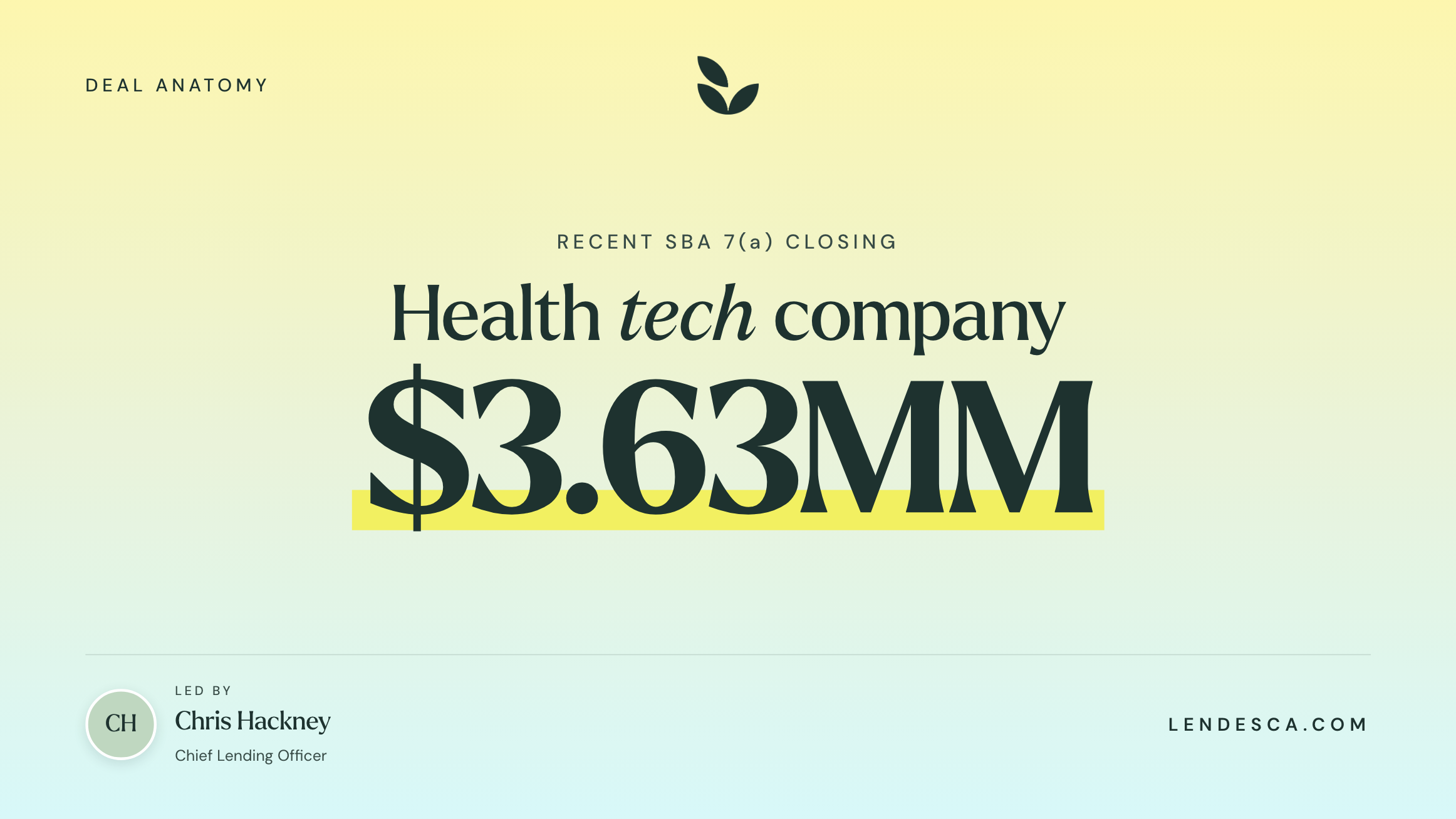
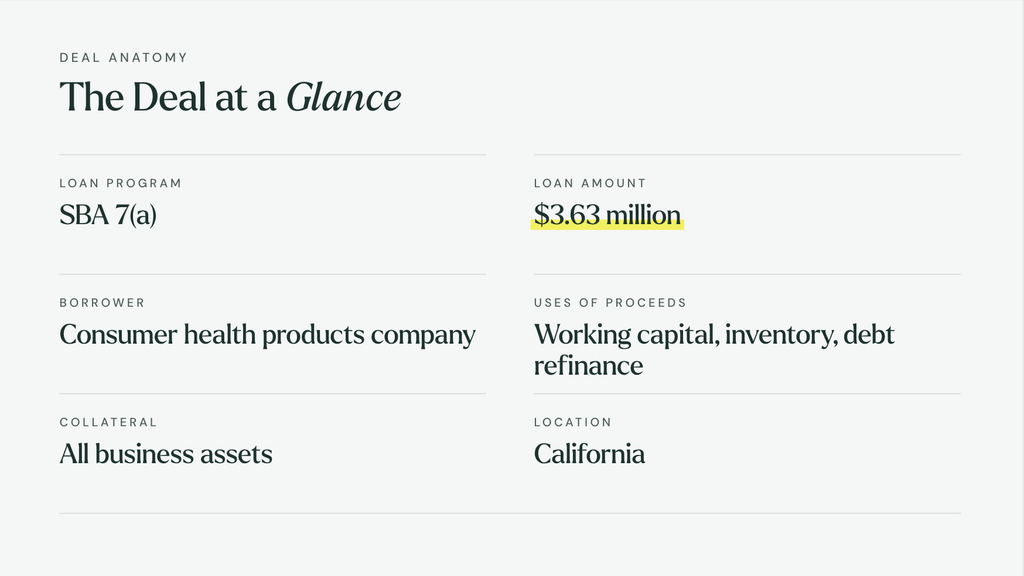
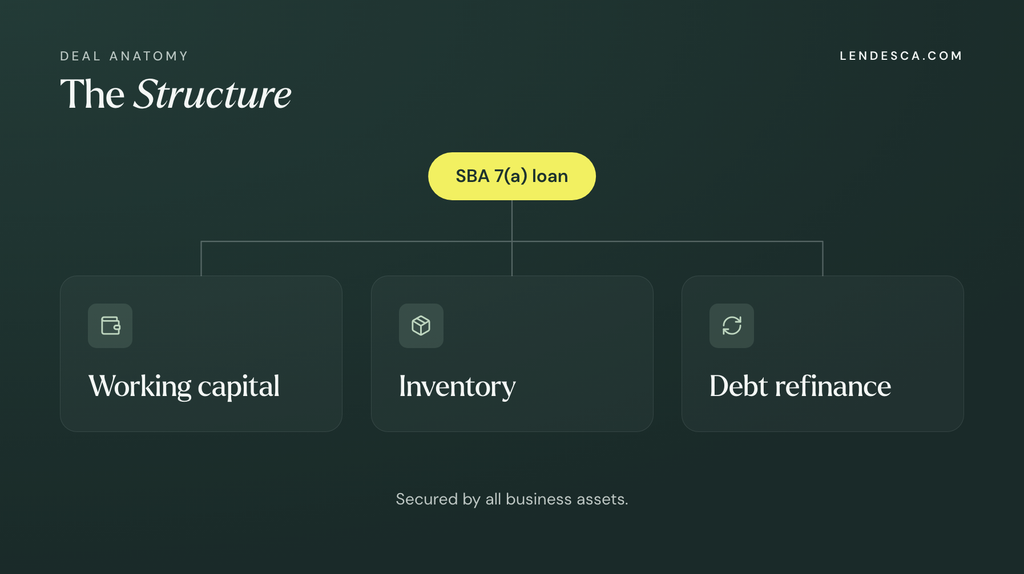
One SBA 7(a) loan for $3.63 million, split across three uses.
The loan is secured by a first lien on all business assets. Our bank partner made the credit decision and funded the loan.
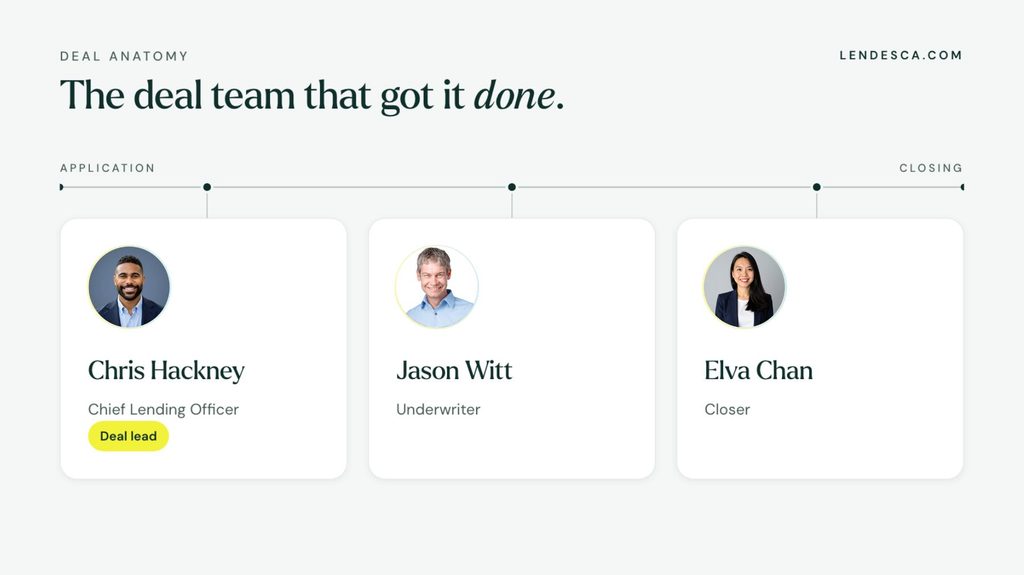
Lendesca handled everything in between. We built the file, structured the request, and managed it from the first conversation through closing, with one team on the deal the whole way.
What to watch for in your own clients
Deals like this one show up in CPA practices, advisory firms, and bank pipelines every week. These are the signals worth paying attention to:
- Sales are growing faster than the balance sheet
- The company outsources manufacturing or sells mostly online
- Large inventory purchases have to happen before seasonal or launch demand
- Short-term debt or an annual line is funding long-term needs
- A bank has already said the collateral comes up short
- The owner needs to solve several capital needs at once
If two or more of these sound familiar, it’s worth a conversation.
Two ways to get started
For referral partners
Work with companies whose sales have outrun their collateral? Send them our way. We’ll handle it from the first conversation to closing and keep you updated on deal status the whole way.
For business owners
Is your business growing faster than your balance sheet? Tell us what’s next, whether it’s a product launch, an inventory build, or a longer runway on existing debt. One team works with you from application to funding.