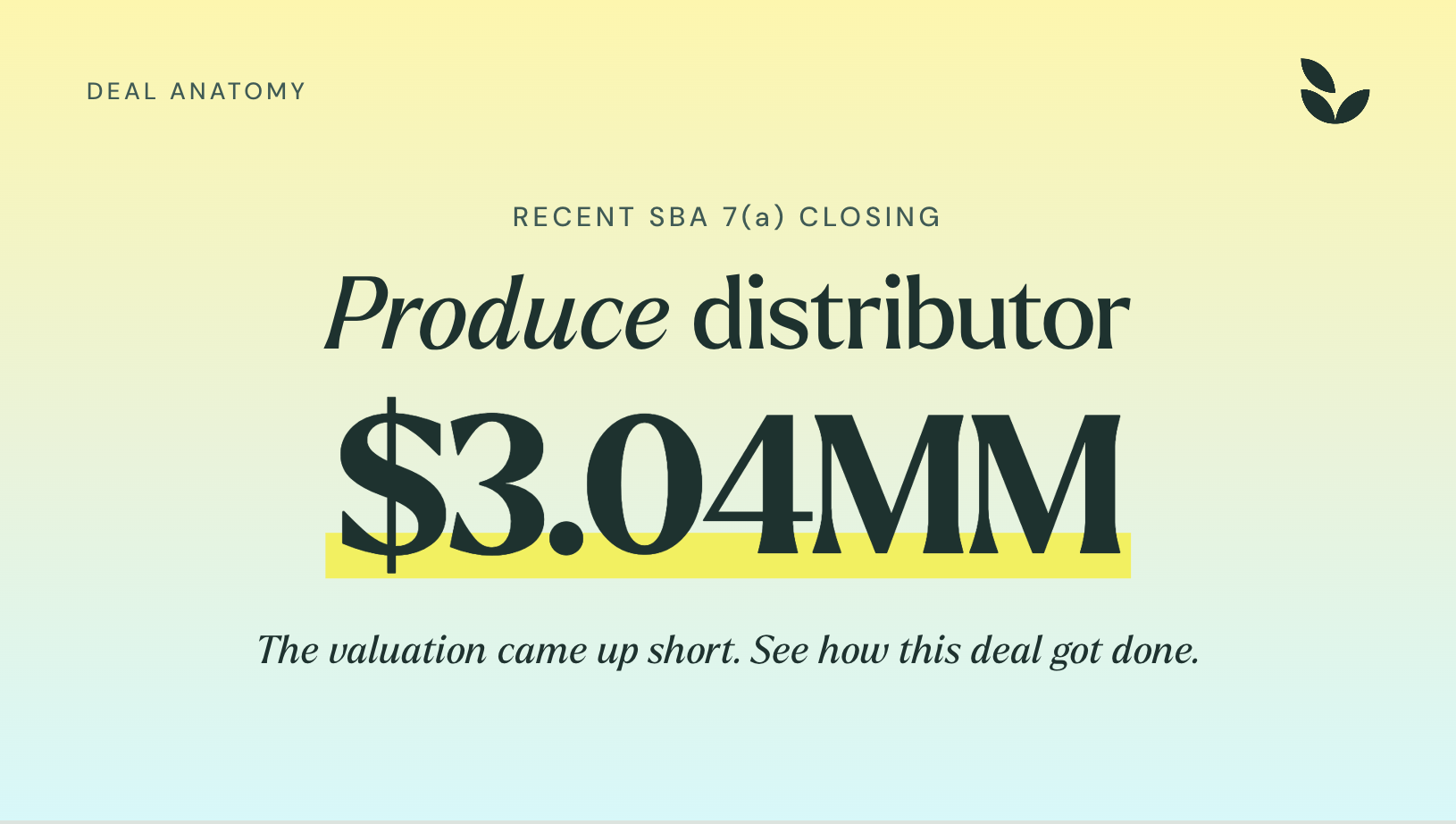
Every acquisition hits a moment where the numbers stop lining up. On this one, it came when the business valuation landed below the purchase price and the seller held firm.
Here’s how the deal still closed.
The buyer and the target
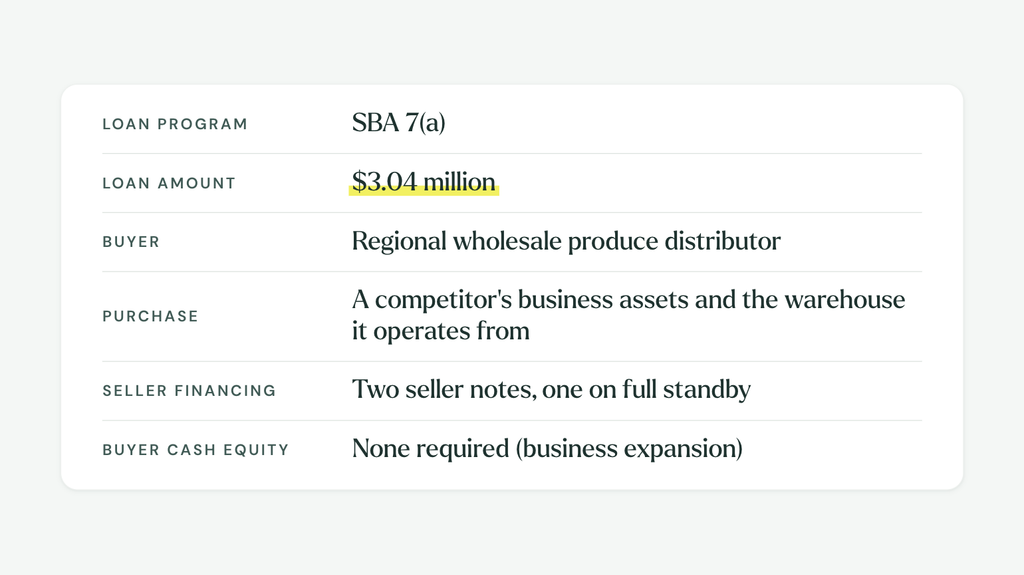
The buyer is a family-owned wholesale produce distributor. It delivers fresh fruit and vegetables to restaurants, schools, hospitals, grocers, and institutional food buyers across a major metro market. The owner grew up in the business and has run it for about a decade.
The target is a long-established distributor serving the neighboring states. It owns its cold-storage warehouse, runs a fresh-cut processing room, and supplies hundreds of institutional customers. Its owners were ready to retire, and growth had stalled without an active sales effort.
Why the deal made sense
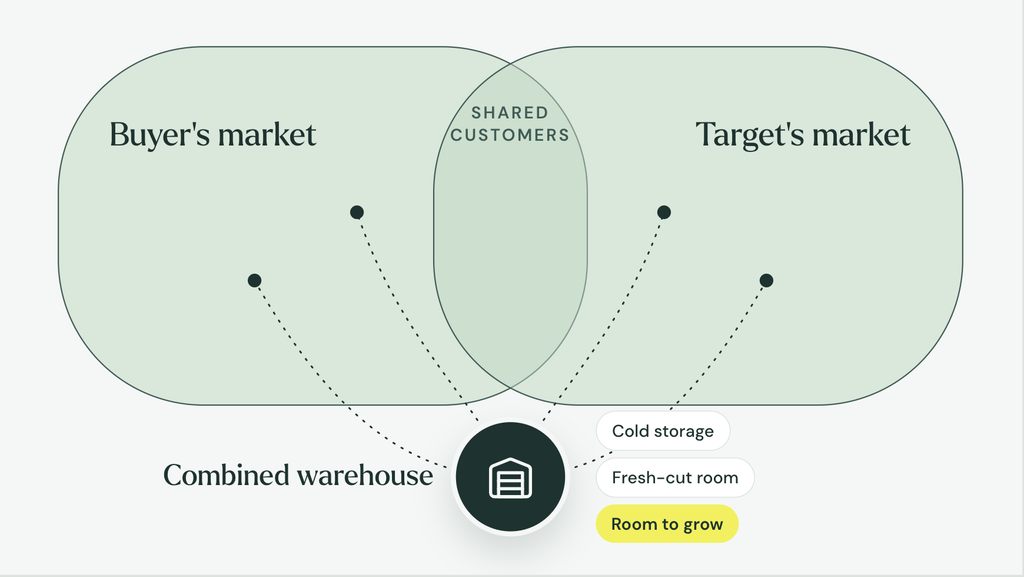
- Territories that touch without overlapping. The two companies served neighboring markets with very little customer overlap. Several of the buyer’s customers already had locations in the target’s territory.
- Room to consolidate. The target’s warehouse had excess capacity. The buyer can move its own operations in and leave its leased space behind.
- A new capability. The fresh-cut room lets the buyer sell peeled, sliced, and prepped produce, a higher-margin product its customers were already asking for.
- Upside on sales. The target relied on referrals and word of mouth. The buyer brings a sales team, online ordering, and regular customer outreach.
The hard part: a valuation gap
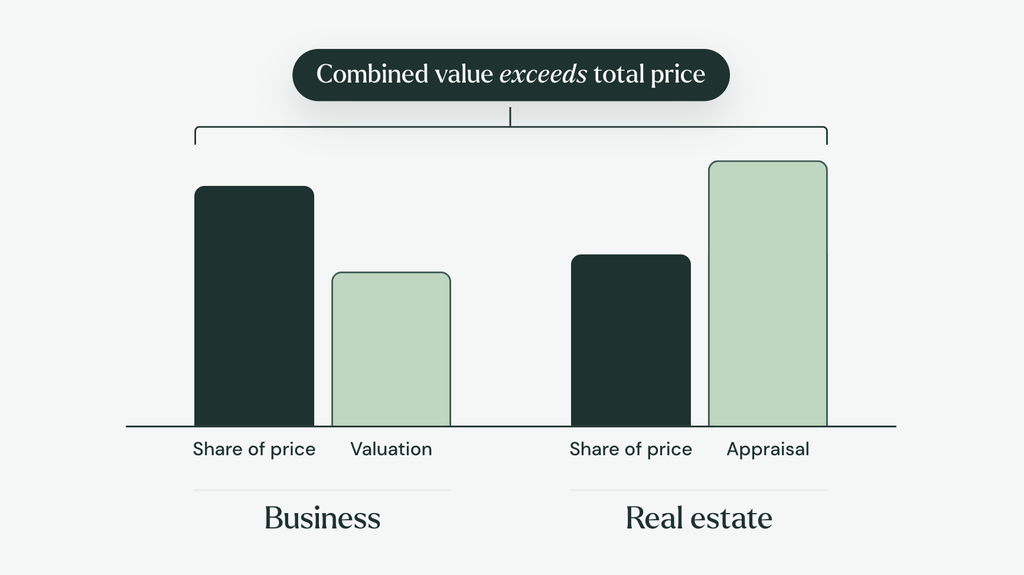
The purchase price was split evenly between the business and the real estate. Then the third-party business valuation came in below the business’s share of the price.
The gap was wider than SBA rules allow without further justification. The buyer went back to the seller to renegotiate, and the seller declined.
How it came together
Three things closed the gap.
- The real estate carried the difference. The warehouse appraised well above its share of the price. Together, the business and the building were worth more than the total purchase price.
- The seller stayed in the deal. The sellers carried two notes. One is on full standby for the first two years, with no principal or interest paid during that time. The seller is also staying on for a transition period to hand over customer and supplier relationships.
- The story behind the numbers. The target’s revenue decline traced back to retiring owners and the lack of a sales function. The market itself was healthy. An experienced operator in the same industry was well positioned to turn that around.
The equity question
Most acquisitions require the buyer to bring cash to the table. This one didn’t.
Under SBA rules, when an existing business acquires another business in the same industry, the deal can be treated as an expansion of the existing business rather than a new venture. Recent SBA rule changes extended that treatment to expansions into a different geographic market.
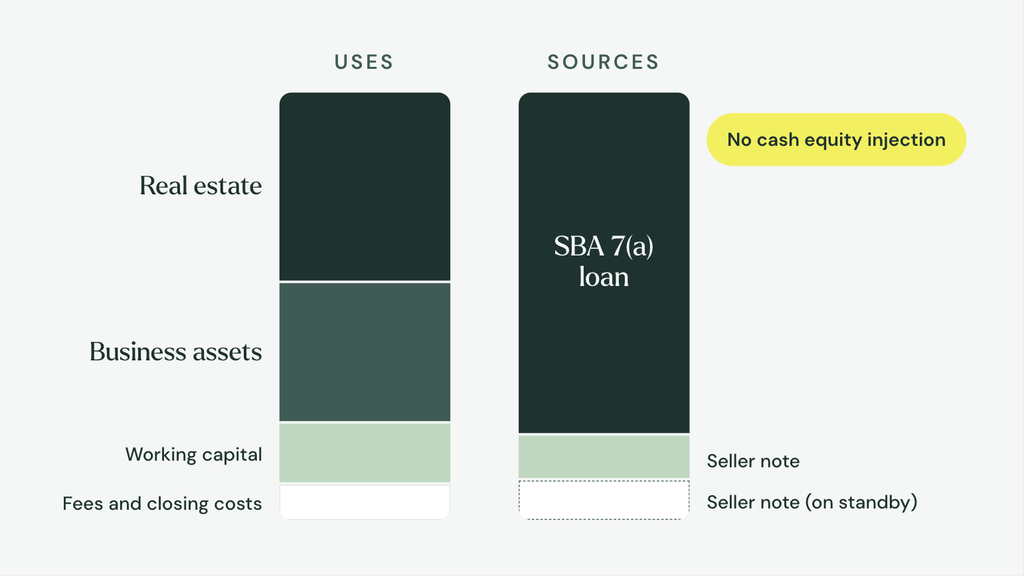
The buyer already ran a produce distribution business in the same industry classification, so no minimum cash equity injection was required. Combined with the seller notes, the full $3.74 million project was financed without a cash down payment from the buyer.
The structure
One SBA 7(a) loan for $3.04 million covered about 81% of the $3.74 million project. The seller notes covered the rest.
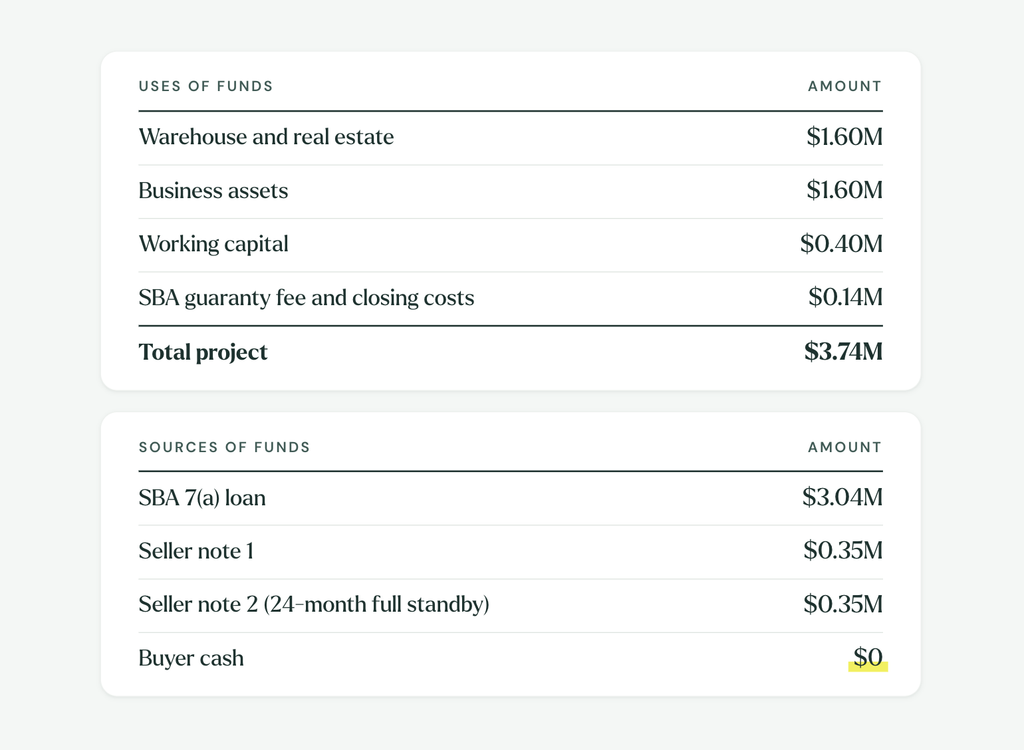
The working capital funds hiring, marketing, and the transition as the two operations combine. The loan is secured by a first lien on the warehouse and the business assets. Our bank partner made the credit decision and funded the loan.
Lendesca handled everything in between. We built the file, structured the request, and managed it from the first conversation through closing, with one team on the deal the whole way.
What to watch for in your own clients
Deals like this one show up in CPA practices, M&A advisory firms, and bank pipelines more often than people expect. These are the signals worth paying attention to:
- A client wants to buy a competitor or another business in their own industry
- The deal includes the building the business operates from
- A valuation came in under the asking price
- The seller is retiring and open to carrying a note or staying on for a transition
- The buyer assumes they’ll need a large cash down payment
- Two businesses serve neighboring markets with little customer overlap
If two or more of these sound familiar, it’s worth a conversation.
Two ways to get started
For referral partners
Have a client looking to buy a business in their own industry? Send them our way. We’ll handle it from the first conversation to closing and keep you updated on deal status the whole way.
Become a Lendesca Referral Partner
For business owners
Thinking about buying a competitor or expanding into a new market? Tell us what you have in mind. One team works with you from application to funding.
This case study describes a single transaction for illustrative purposes. Some details have been generalized to protect the borrower’s privacy. Lendesca is not a lender. Credit decisions are made by, and loans are funded by, our bank partner. SBA loans are subject to SBA eligibility requirements and bank credit review. Equity requirements, valuation standards, and terms depend on each transaction and on current SBA rules.