The increase is overdue and it should pass. Then the industry has to prove it deserved it.
Read more →
For fifteen years, small business borrowers who needed more than $5 million in SBA-backed financing hit the same wall. The 7(a) loan cap has sat at $5 million since 2010, and the way the agency counted a borrower’s combined program exposure meant that ceiling applied across the board. Deals that needed $6, $8, or $10 million went […]
Read more →
Ask most SBA lenders which loan type carries the least risk and you’ll get a range of answers — usually built on intuition, experience, or anecdote. The data from 373,981 SBA 7(a) loans funded between FY2020 and FY2025 gives a more definitive answer: change-of-ownership loans, used to buy an existing business, have the lowest charge-off rate of any major […]
Read more →
There is a persistent assumption in bank lending circles that small SBA loans are the safe ones — approachable deal sizes, familiar borrower profiles, lower dollar exposure if something goes wrong. The data, analyzed across 371,156 SBA 7(a) loans funded between FY2020 and FY2025, tells a more complicated story. Charge-off risk in the 7(a) program […]
Read more →
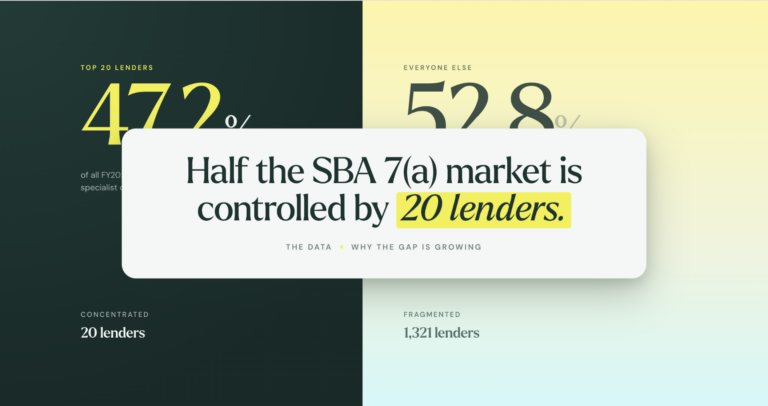
The SBA’s annual lending data tells a clear story to those willing to read it carefully. Strip out the noise from the pandemic-era programs — PPP, COVID EIDL — and what you’re left with in the core 7(a) program is a market that is growing, concentrating rapidly in the hands of a small number of […]
Read more →

For decades, employee stock ownership plans have been one of the most powerful — and most underutilized — tools for business succession, employee retention, and tax-advantaged ownership transitions. The concept is straightforward: instead of selling your business to a competitor or a private equity firm, you sell it to your employees through a trust. They […]
Read more →

If you’re a lender, broker, or borrower involved in SBA lending and you feel like the ground has been shifting under your feet for the past year, you’re not imagining it. Between June 2025 and March 2026, the SBA issued a series of sweeping changes to the SOP 50 10 8 that have fundamentally altered […]
Read more →
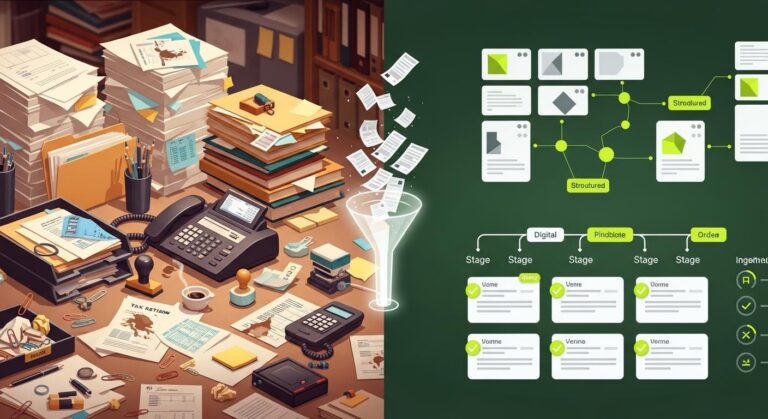
A recent episode of The Deep Dive podcast examined our pitch materials and financial overview — and the conversation that followed is one of the clearest explanations we’ve heard of why SBA lending is broken and what it takes to fix it. Rather than summarize our own model in our own words, we thought we’d […]
Read more →
Let me describe a scene that anyone in SBA lending will recognize immediately. A borrower submits a loan application with 150 pages of documents — tax returns, financial statements, a purchase agreement, personal financial disclosures. Those documents land on an underwriter’s desk. The underwriter opens the first tax return, starts reading page by page, and […]
Read more →